Media Hub
Powering the Modern Grid: The Energy Nexus Cluster Redefines Flexibility in Brussels
On June 8, 2026 energy experts gathered in Brussels for the third Energy Nexus Cluster (ENC) workshop: Synergies for a Resilient & Flexible Energy System. Held ahead of the European Sustainable Energy Week, the event brought together nine EU-funded projects to exchange results and strengthen collaboration on a more resilient and flexible energy system. Discussions highlighted the transition from a traditional electricity sector to a digital ecosystem in which information flows increasingly complement the physical flow of electricity, enabling new forms of coordination across the grid.
The Communication Line: Bridging Production and Consumption
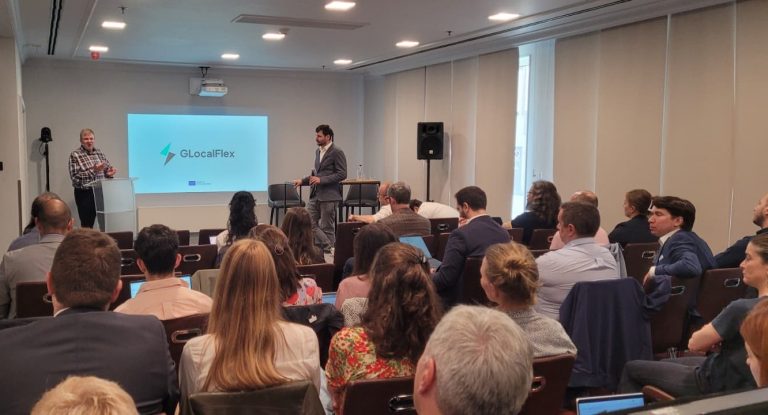
The seminar was opened by Klaus Känsälä, from VTT, as coordinator of the GLocalFlex project, which organised and hosted the event as leader of the Cluster. He explained how renewables, electric vehicles and rooftop solar panels have transformed electricity systems. Their rapid growth has increased variability, creating new operational challenges, price volatility and potential congestion. He argued that the lack of effective communication between production and consumption prevents consumers from responding to available renewable generation, leading to inefficiencies.
In this context, nine of the 15 projects forming the ENC are developing a communication layer that links production and demand in real time, improving grid management while supporting new technical solutions and business models for producers and prosumers (meaning users who also produce energy). Better information exchange, he argued, will be essential to a more stable and responsive energy ecosystem.
Vision 2050: Massive Electrification and the Flexibility Surge
Marion Labatut, Head of EU Affairs at EDF, presented a long-term vision in which flexibility needs rise sharply as Europe approaches a power mix of 75-80% renewables by 2050. She stressed that demand-side flexibility and electrified end users will become increasingly important resources, complementing existing centralised mechanisms.
In her view, local flexibility solutions should be integrated into interoperable architectures capable of maintaining system stability at scale. EDF sees research projects as an important bridge towards commercial deployment and called for future European funding frameworks “to keep flexibility at the centre of industrial decarbonisation efforts”. She concluded that strong cooperation between research organisations and industry will be required “to transform promising demonstrations into deployable large-scale solutions”.
The Nexus Project Showcase: Innovations in Action
The core of the seminar was the presentations and subsequent Q&A sessions by the 9 participating projects. Each one offered its own perspective on the flexibility challenge, addressing different facets of the issue.
STREAM – Streaming Flexibility to the Power System
Presented by Tomi Medved from University of Ljubljana, this project focuses on building a robust flexibility ecosystem for low-voltage grids. A standout development is the sPLAN tool, a decision-support system that helps Distribution System Operators (DSOs) evaluate whether flexibility can replace or defer costly physical grid reinforcements. Tested at an industrial park in Ajdovščina, Slovenia, the project utilizes digital twins to simulate future scenarios involving high penetrations of solar PV and electric vehicles. STREAM also identifies critical regulatory gaps, advocating for clear mandates for DSOs to procure flexibility for congestion management.
REEFLEX – Making Energy Flexible: From Concept to Reality with REEFLEX
Gregorio Fernández Aznar from CIRCE Foundation presented this project’s mission to establish common operational market models that enhance transparency and trust. The REEFLEX Data Platform serves as an interoperability backbone, standardizing signals from sensors and home devices up to aggregators and markets. By using AI-driven intelligence, the project aims to take small prosumers «by the hand» and facilitate their entry into flexibility markets with minimal barriers. REEFLEX covers the entire value chain, from initial sensing and forecasting to finalized settlement.
MASTERPIECE – Facilitating flexible Energy Communities through a context-aware perspective
Represented by Adelaida Parreño from University of Murcia (UMU), MASTERPIECE focuses on the social dimension of the energy transition. The project developed a modular platform featuring tools like MEET for energy literacy and DR-FLEX for demand optimization. Real-world demonstrations ranged from «climate shelters» at university campuses to engaging rural Turkish households without internet connection through «local champions». A key takeaway from their pilots is that healthy competition and personal examples are more effective at mobilizing citizens than technology alone.
ENFLATE – ENabling FLexibility provision by all Actors and sectors through markets and digital TEchnologies
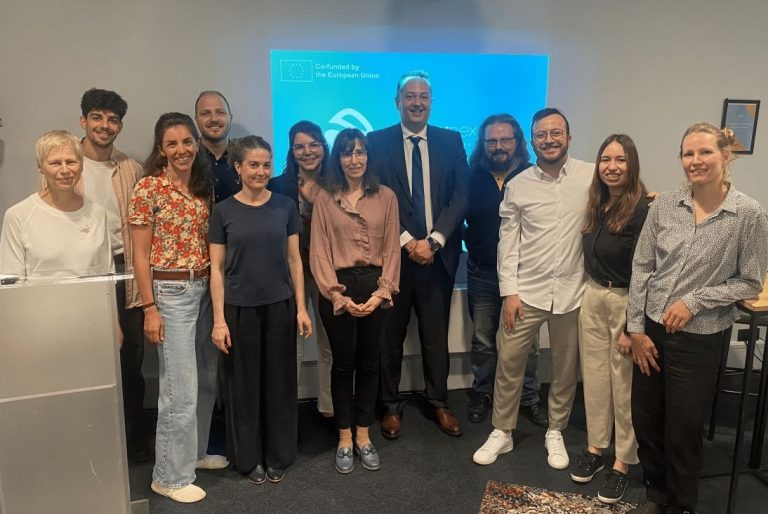
The ENFLATE project concluded its four-year journey by holding its Final Event within the framework of the ENC Seminar. Coordinated by Louiza Kachrimani of NOVA, ENFLATE showcased the DFLEX marketplace, a blockchain-backed platform allowing small-scale assets to trade flexibility in real-time. The project demonstrated technical success in Skiathos, Greece, where appliances like water heaters and heat pumps reacted in seconds to grid signals. Beyond energy, the project demonstrated non-energy services, such as a health assessment tool in Sofia, Bulgaria, that monitors elderly welfare through energy consumption patterns. Their results show that distributed flexibility can significantly reduce greenhouse gas emissions across the European system.
GLocalFlex – Low-Barrier Flexibility Trading
Klaus Känsälä explained the characteristics of the marketplace envisioned in the GLocalFlex project, which aims to democratise access to energy markets by establishing a low-barrier, flexibility-agnostic marketplace. By utilizing automated Trading Agents (TAs), the platform enables everyone, from individual households to large industrial actors, to sell energy flexibility without requiring daily human intervention. The system integrates advanced technologies like smart contracts and Decentralized Identifiers (DIDs) to ensure secure, automated trading, verification, and settlement. This methodology minimizes transaction costs through a pay-as-bid auction model that matches orders based on volume, timing, price, and location. The project is demonstrating its replicability across six diverse European pilot sites, testing solutions in residential, commercial, and industrial environments. Ultimately, GLocalFlex facilitates the scalable integration of renewable energy resources by transforming passive consumers into active market participants.
STUNNED – Managing Complexity in energy communities
Presented by Matteo Porta from RINA Consulting, STUNNED focuses on the orchestration of complex energy systems at aggregated industrial and residential sites. The project utilizes the Stackelberg Game optimization method to find a balance between the aggregator’s revenue goals and the building owner’s cost-reduction needs. Demonstrations in Italy, Spain, and France compare centralized, decentralized, and distributed orchestration models. The solution aims to reduce total energy demand while ensuring grid stability through ancillary services like peak shaving.
RESONANCE & INDEPENDENT – AI for Interoperability
Sohvi Virkkula of VTT presented these sibling projects, which address the technical burden of integrating heterogeneous legacy systems. They are pioneering the use of Large Language Models (LLMs) to automatically generate «Semantic Adapters». This automation drastically reduces the manpower and domain expertise required to connect disparate building resources to optimization models. The projects utilize the SAREF ontology to ensure all resources can «speak the same language» in multi-market settings.
BeFlexible – Industrialized Digital Services
Presented by Ricardo Bessa from INESC TEC, this project accelerates flexibility through enhanced DSO-TSO cooperation and industrialized digital platforms. A core innovation is grid segmentation, which allows DSOs to group consumers into zones with similar grid impacts, making flexibility procurement easier for aggregators. BeFlexible utilizes SAP technology to ensure their solutions are scalable and fast to deploy across different European regions. Their pilots show that participation in local flexibility markets can significantly reduce the payback period for community investments in batteries and solar PV.
Beyond Technology: It is All About People
As the seminar drew to a close, Klaus Känsälä shared his final impressions on the highly productive and interactive nature of the workshop. He proposed the formation of an «Energy Nexus Forum» to maintain this real-time exchange of information, bypassing the typical delay of academic publications. Känsälä remarked that «real, important innovations are not the result of hype,» but rather the result of hard work by dedicated people.